Give & Grow | Stanford d.School X Nasdaq
Our team of three designers from the Stanford d.School worked in partnership with the Nasdaq Entrepreneurial Center where we were tasked with scaling the program by tenfold (100,000 —> 1,000,000 founders assisted) and reducing the failure rates for founders coming from under resourced backgrounds with a delivery deadline of four weeks.
Problem Framing for the Entrepreneurial Center
The bulk of what the Nasdaq center provides comes through mentorship programs, where they rely on alumni and other founders or professionals to volunteer to serve as mentors. However, less than 22.3% of founders who have benefited from Nasdaq’s free resources come back to mentor. Given that the capacity for each program is limited by the number of mentors available, we aimed to increase the turnover rate of alumni becoming mentors.
Needfinding for the Prospective Mentors
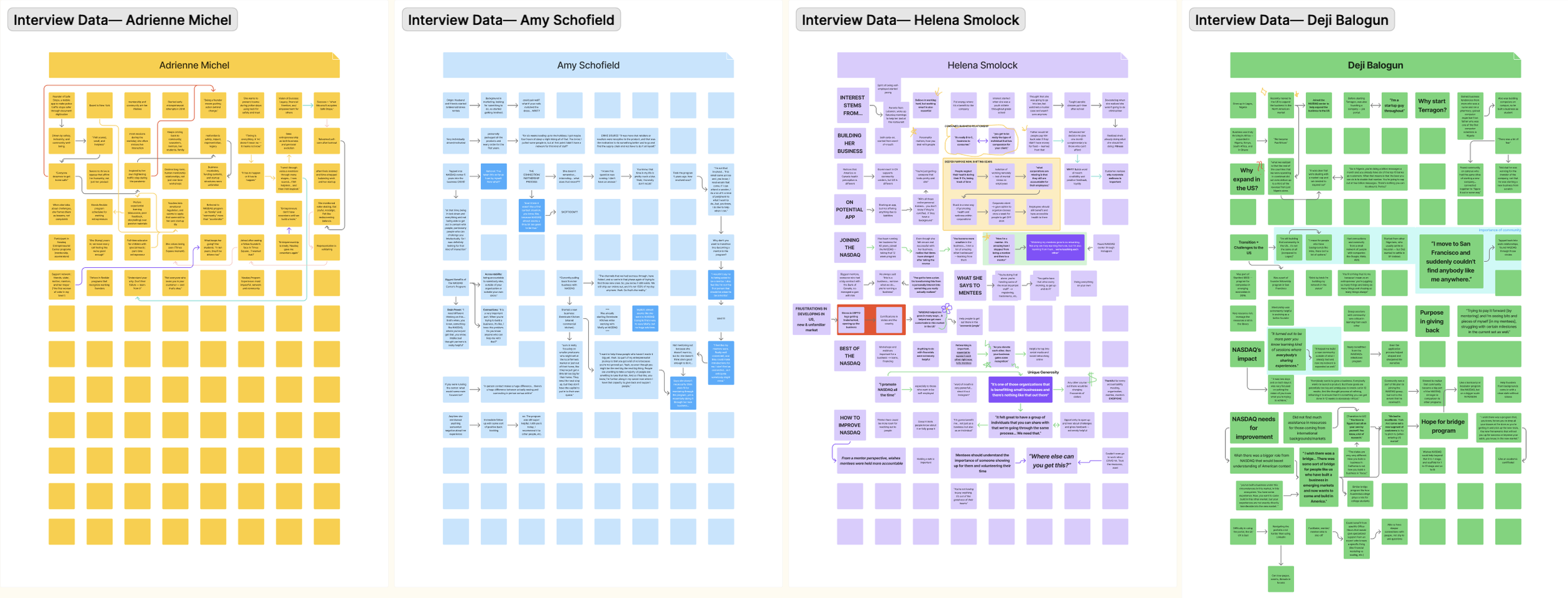
Four 60 minute interviews conducted. Notes, analysis, synthesis via FigJam.
Personas




Synthesis
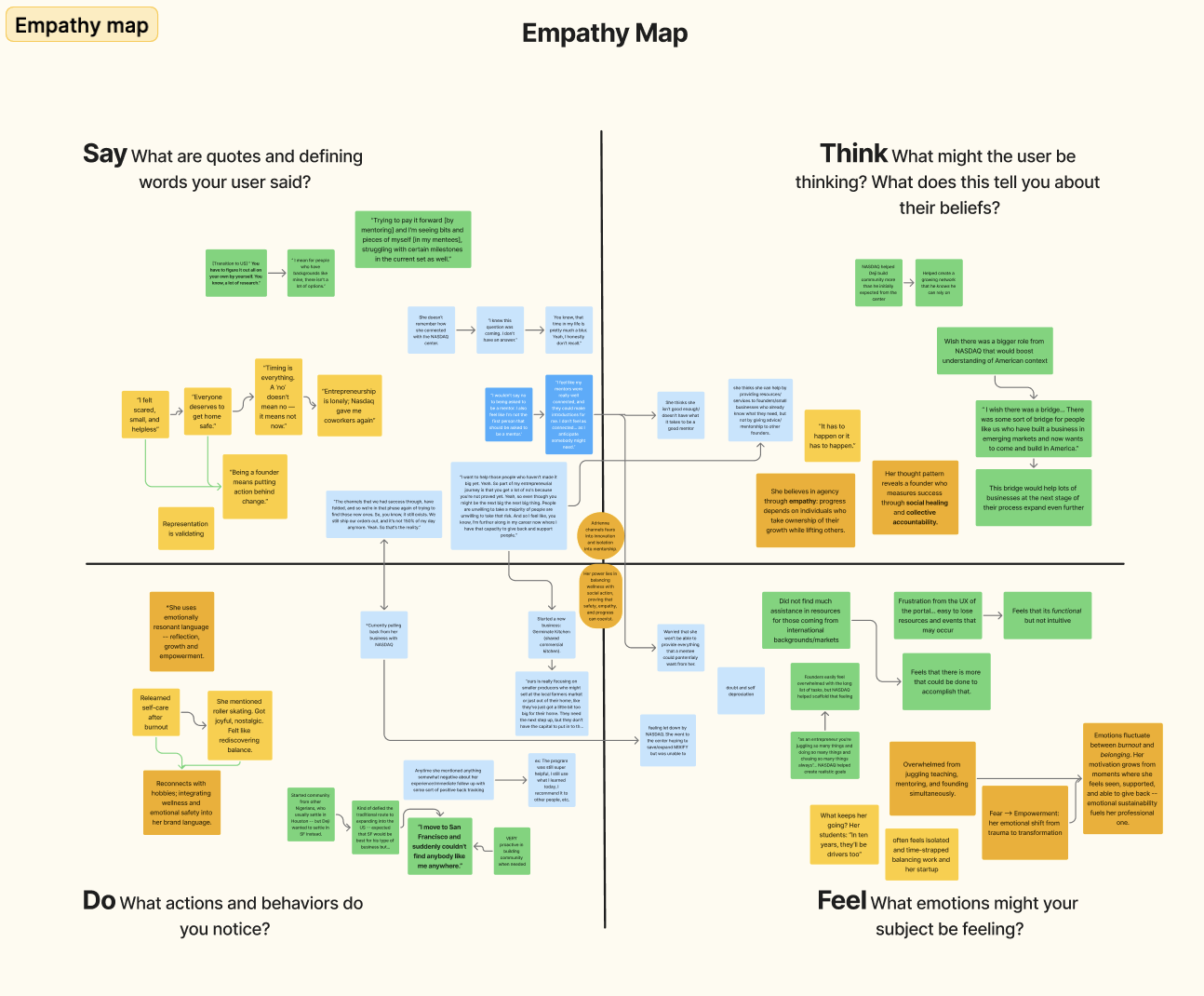
Empathy mapping
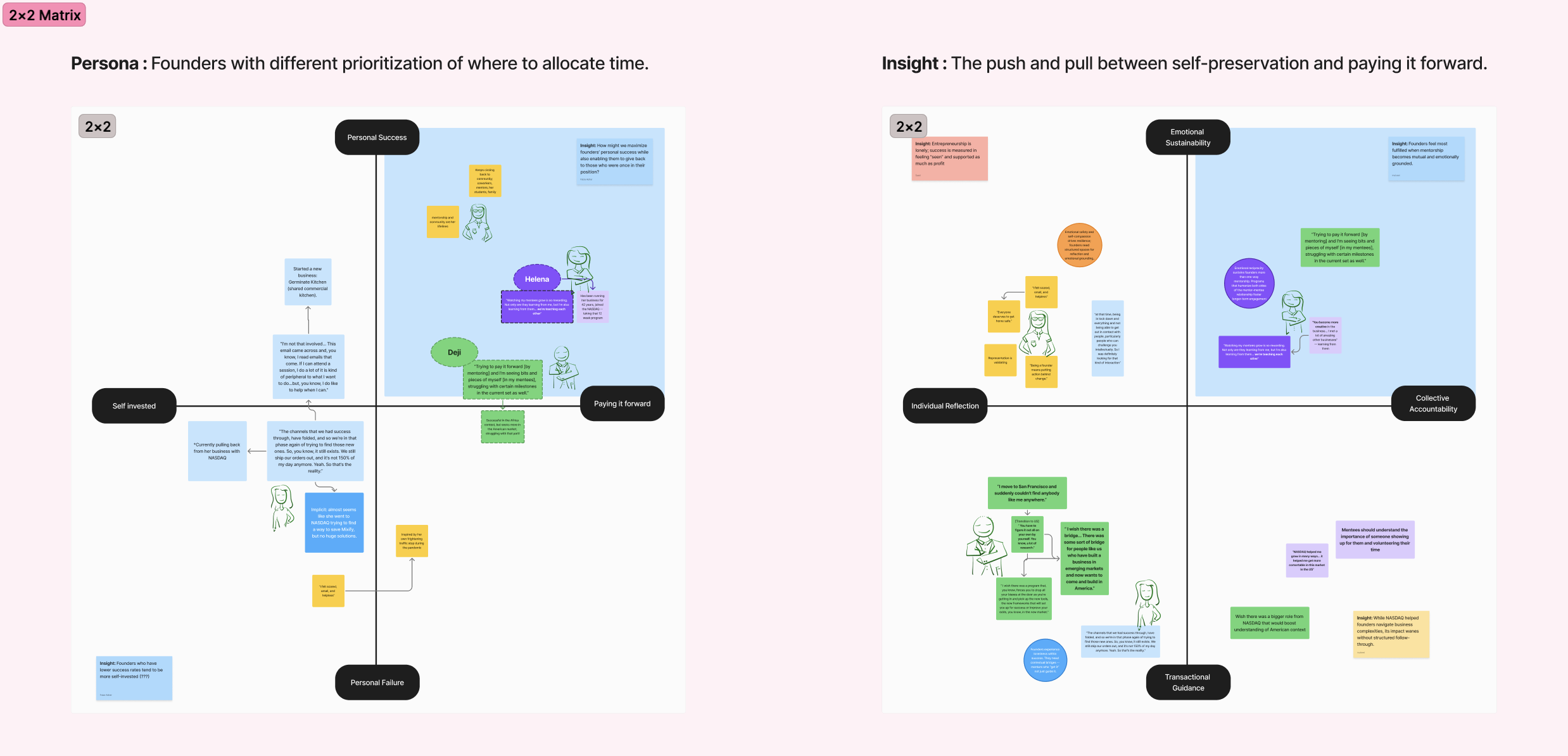
2x2 Matrixes
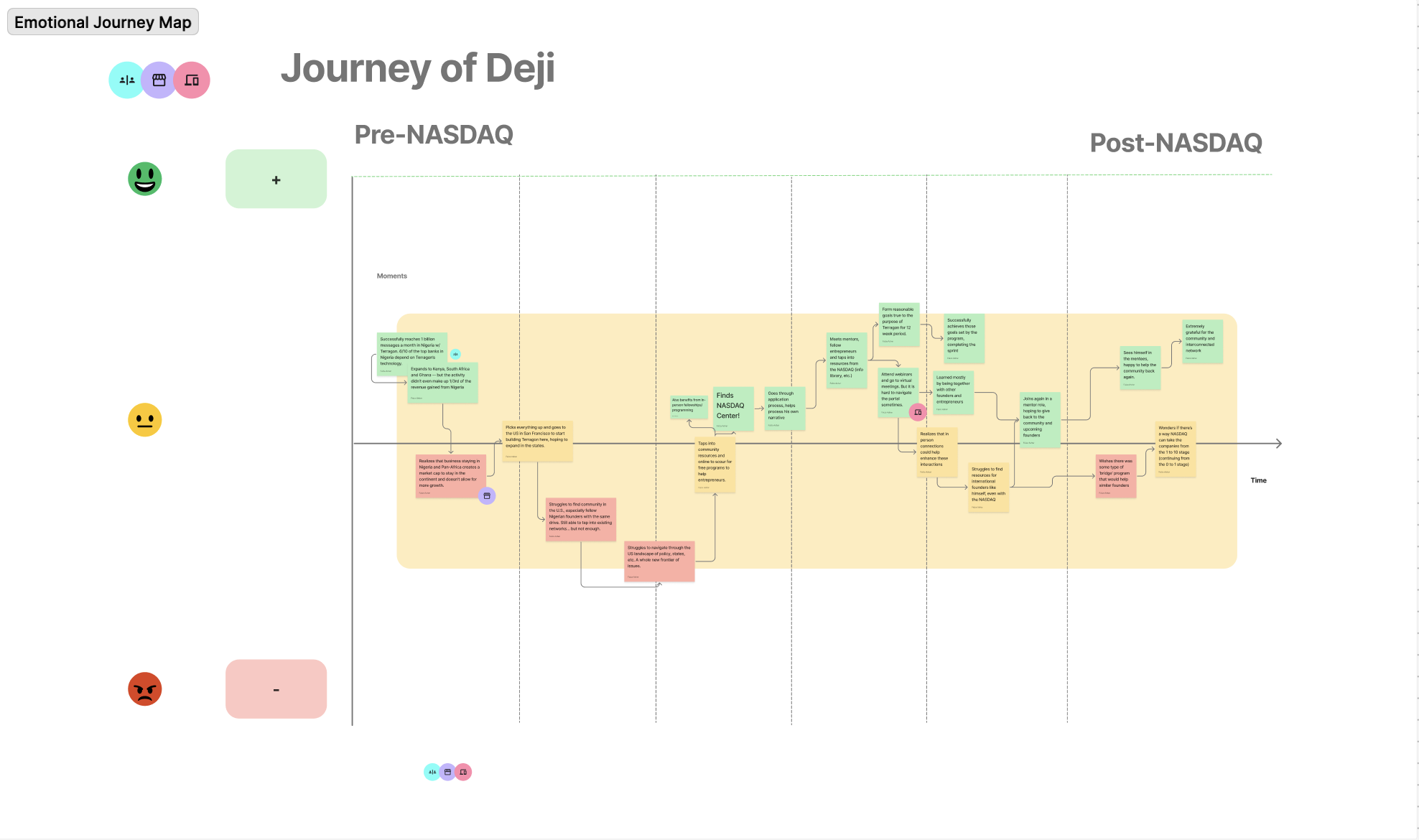
Journey Maps

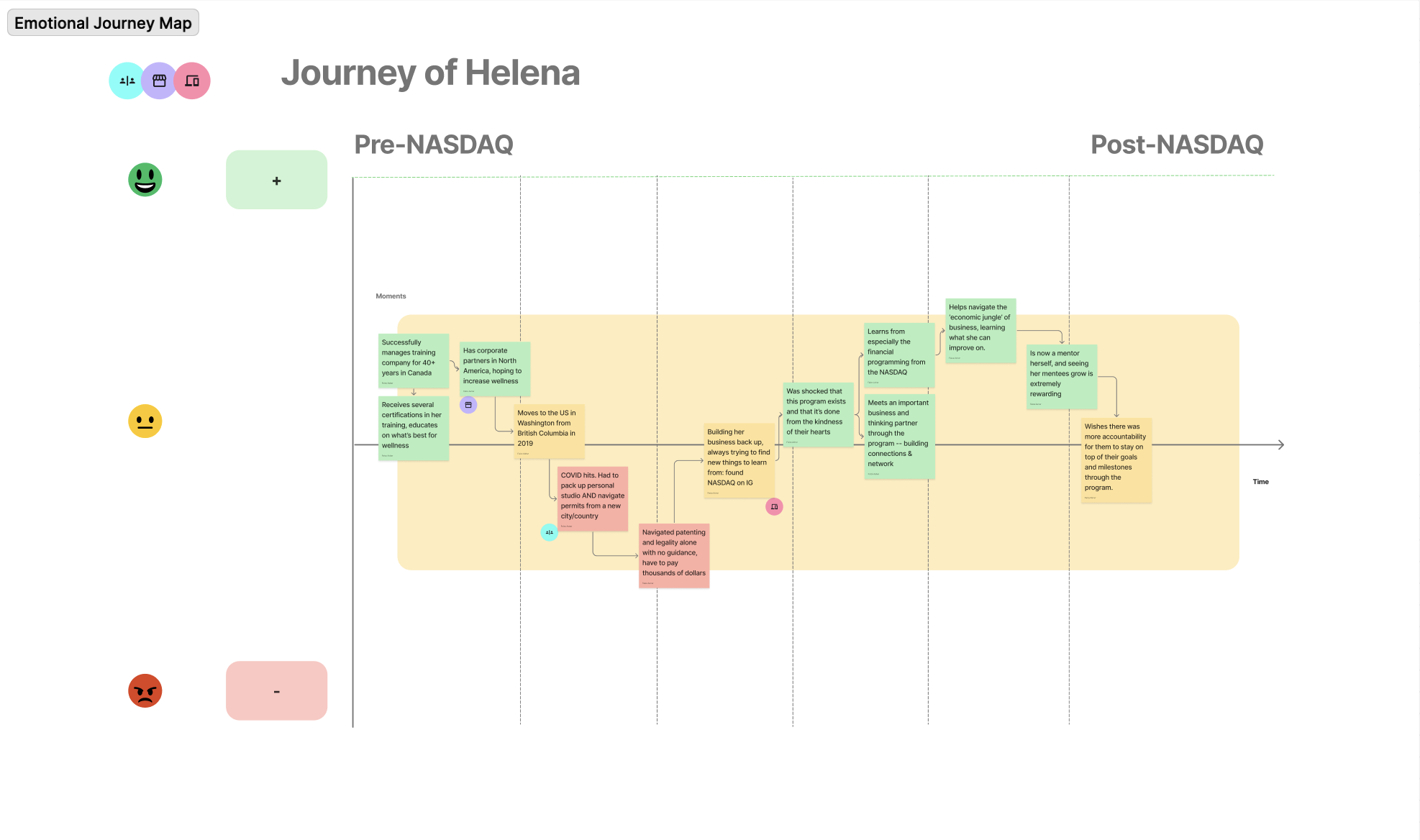
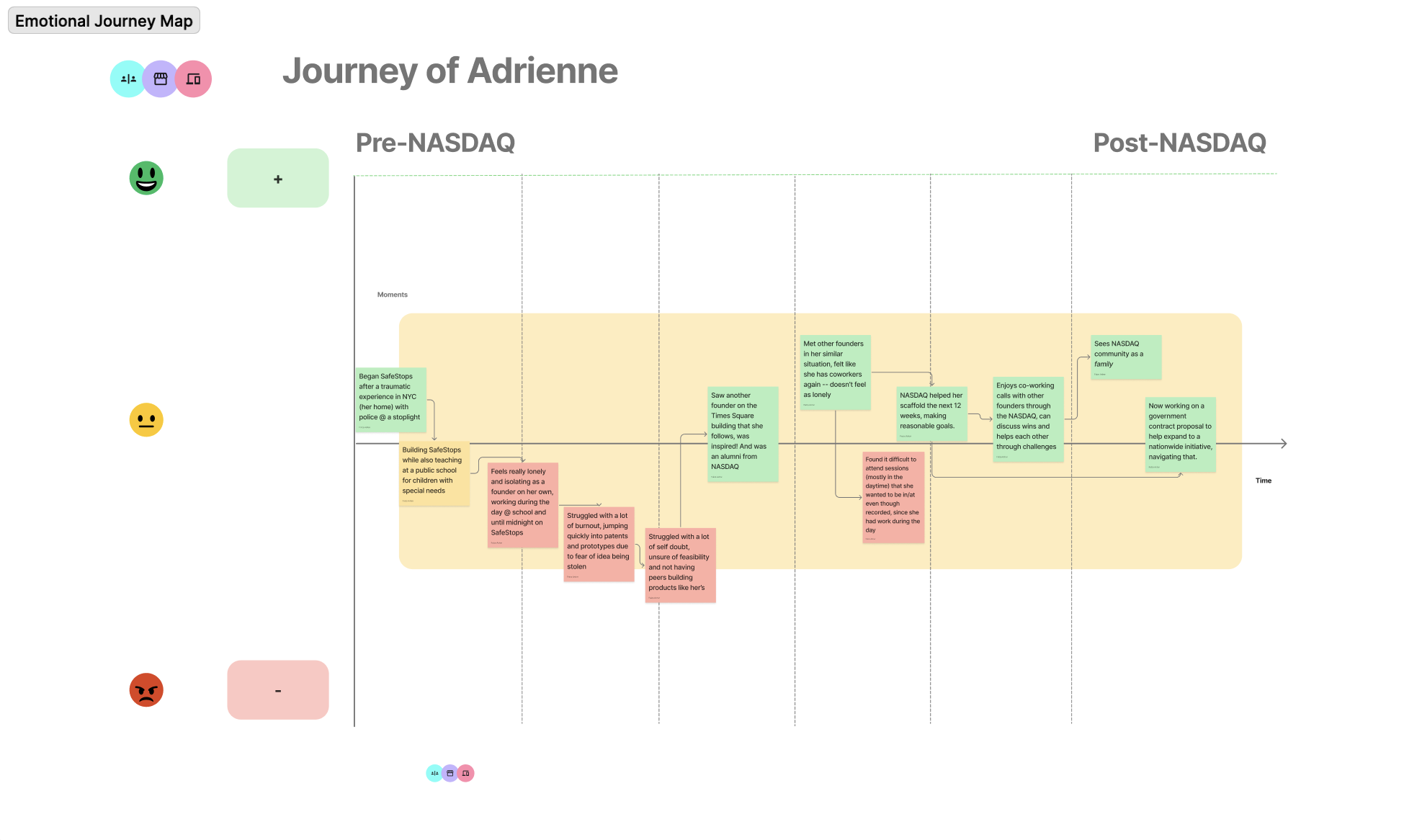
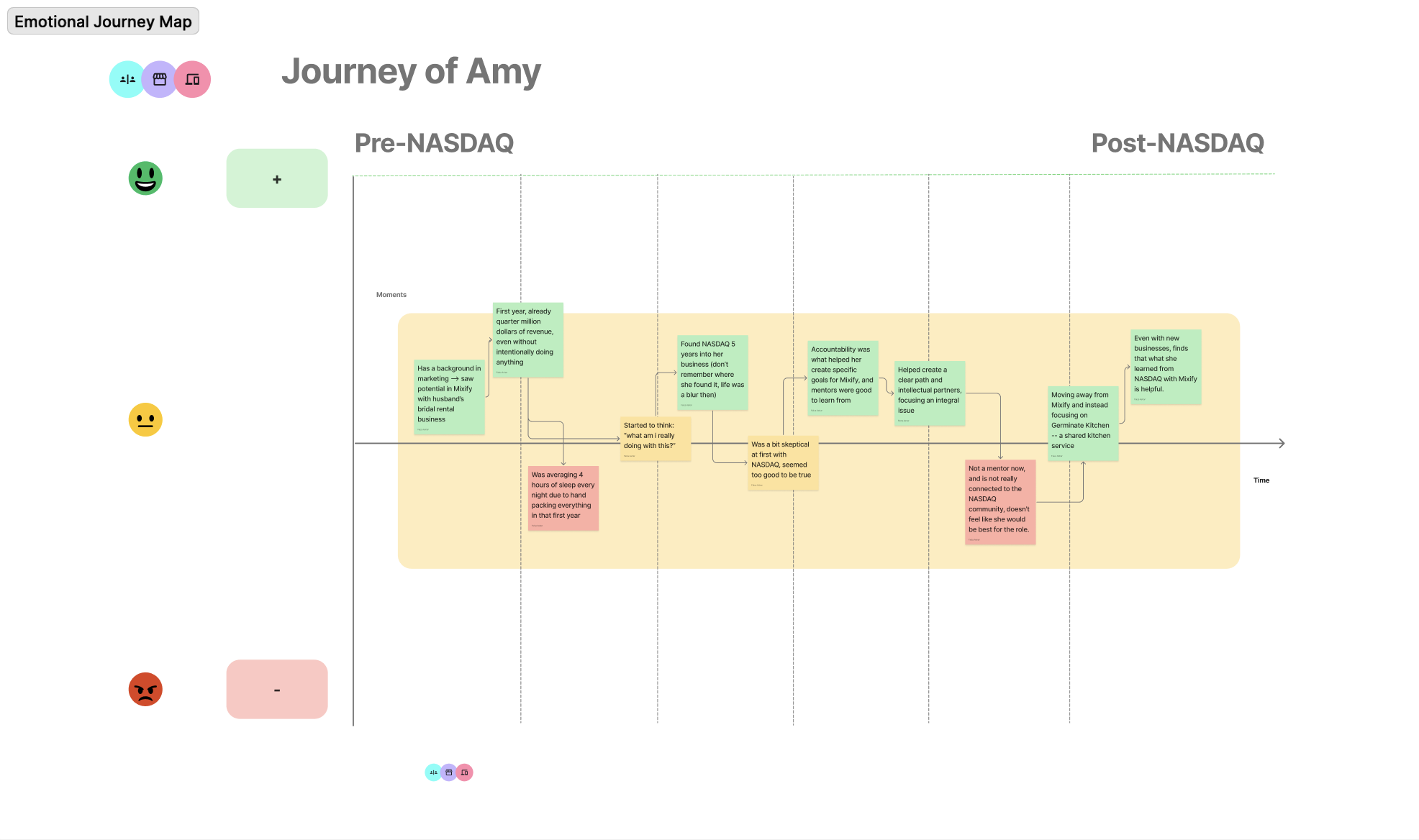
First Insight
“I wouldn't say no to being asked to be a mentor. I also feel like I'm not the first person that should be asked to be a mentor.”
—>
Prototype 1 - North Star Line
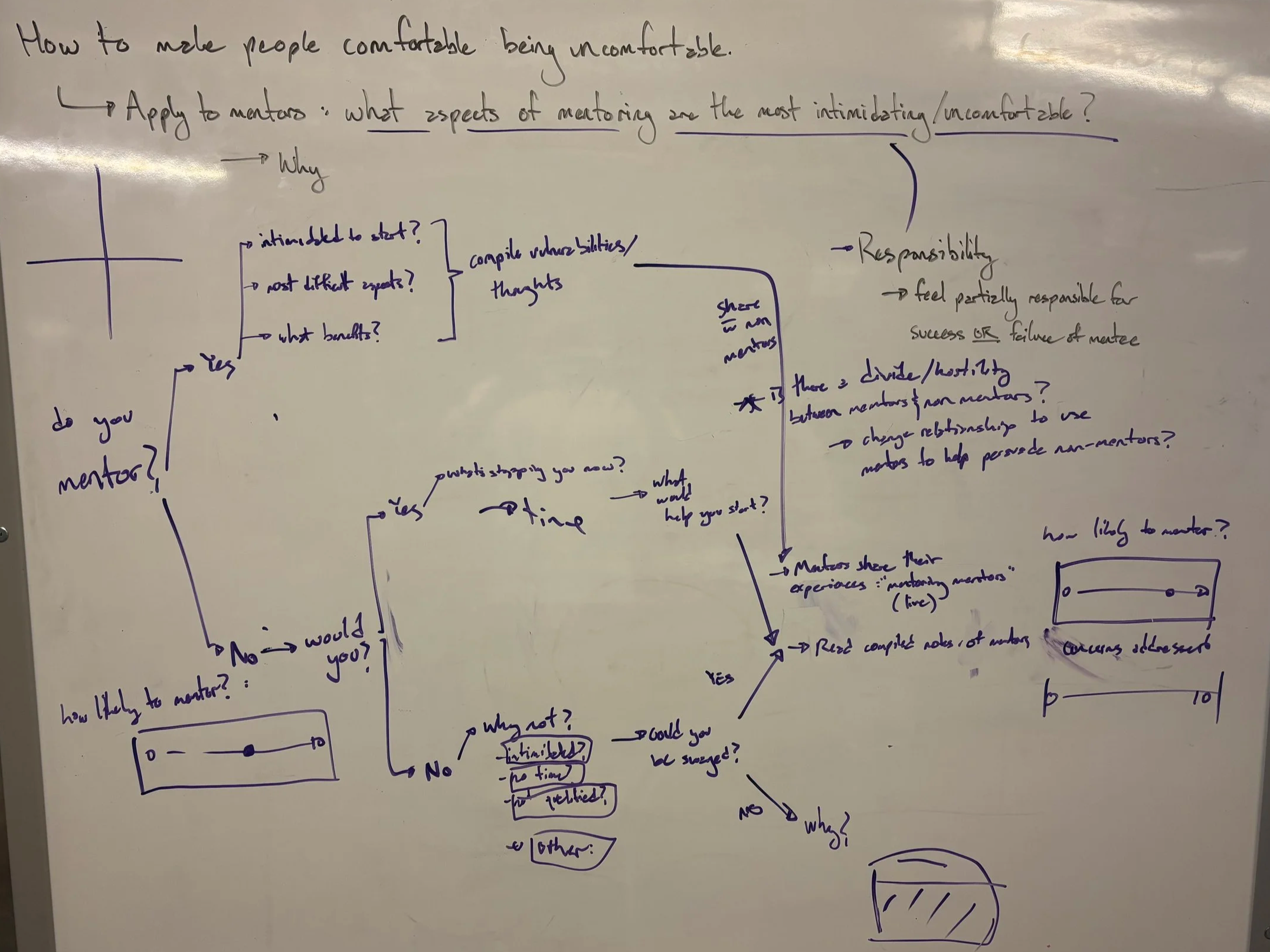
Information Framing: we first laid out the flow key questions on varying pathways based on the information we wanted to draw out of our users.
Nearly all founders coming from under resourced backgrounds already have the intrinsic motivation to help others coming from similar circumstances, yet many are unable to because they do not have the bandwidth to volunteer to mentor in addition to managing their own business; it simply is not economically possible.
A tiered rewards system that provides benefits to founders proportional to how much they have invested in mentoring. If founders are willing to divert time away from their own business and invest it towards helping other founders, the NASDAQ center should reciprocate that by offering rewards that help them develop their personal business. Examples: media recognition (LinkedIn, Nasdaq newsletters, NYC billboard), access to pitch events, free legal or professional consultation, invites to quarterly networking mixers and exclusive conferences, scholarships for higher education, etc.
WHY?
—>
“I feel like my mentors were really well connected, and they could make introductions for me. I don't feel as connected as I anticipate somebody might need.”
Although many founders want to pay it forward by serving as mentors, some are intimidated or feel under qualified. If we create an intervention to boost confidence in mentoring ability, we will inherently also increase the turnover rate of founders becoming mentors.
—> How might we bridge a connection between mentors and non-mentors, where those who have mentored or are currently mentoring can share their experiences, addressing any potential concerns and providing guidance on how they overcame any obstacles associated with mentoring?
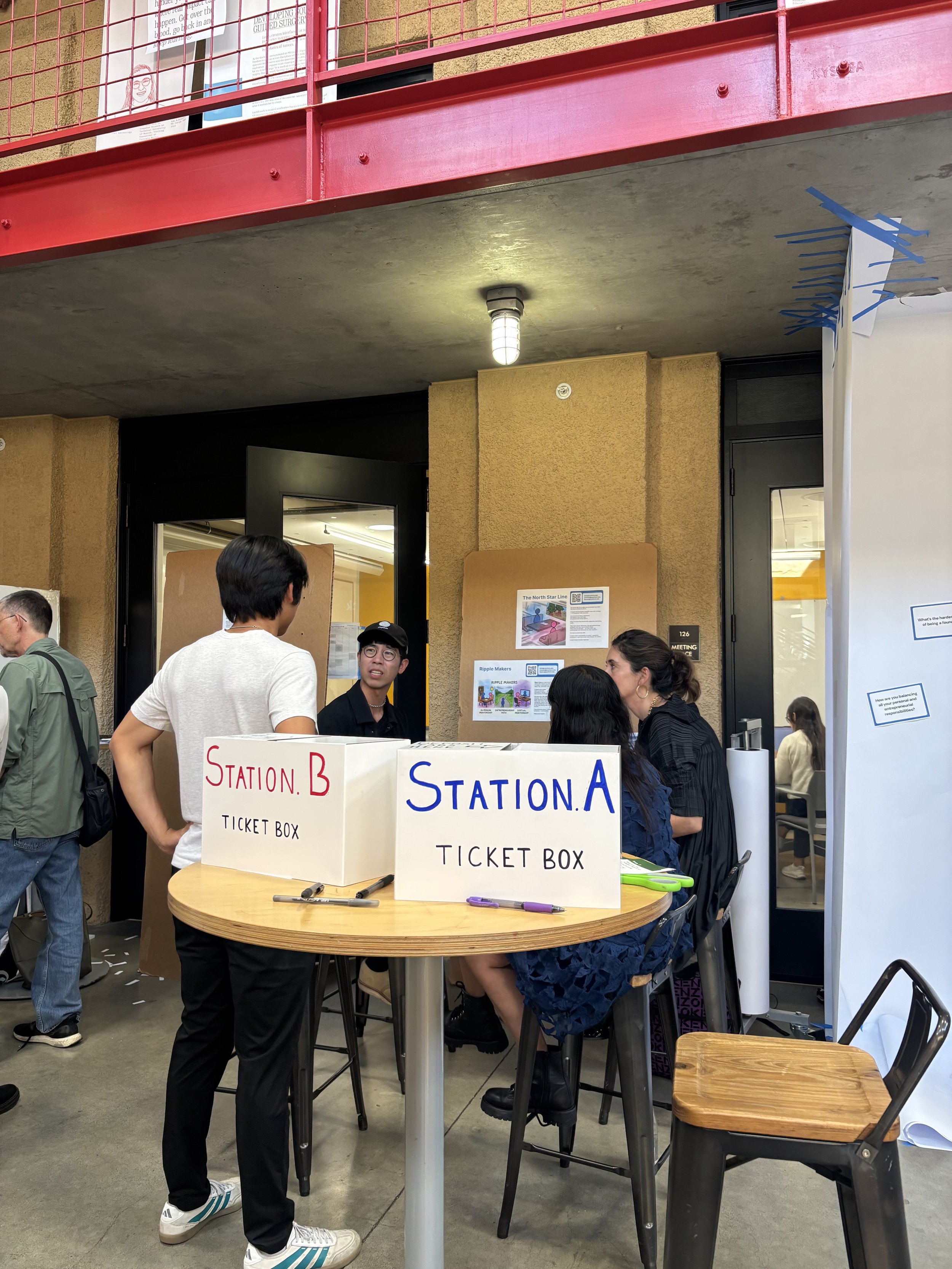
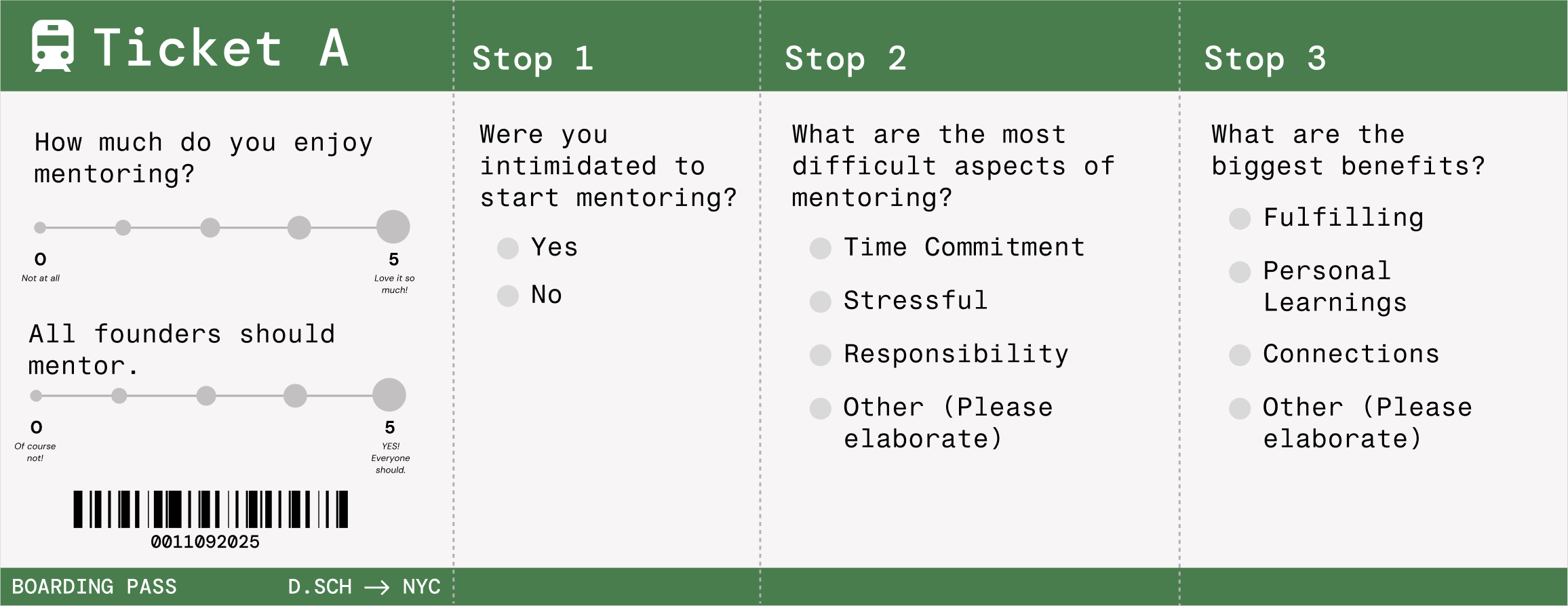
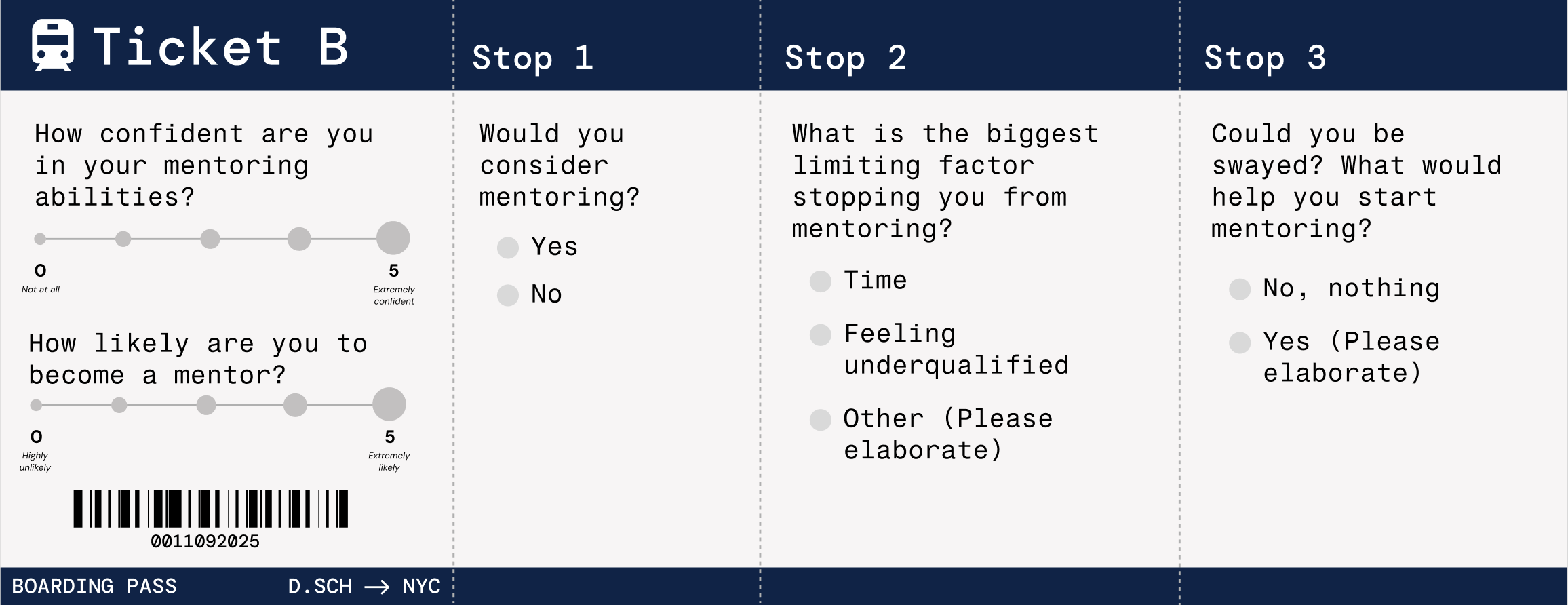
After filling out a questionnaire in the form of a ticket, mentors and non-mentors will board the train and be offered a “menu” prompting a casual yet insightful conversation about mentoring.
Aim 1: Test if it is possible to foster relationships between mentors and non-mentors and if it positively impacts confidence or likelihood to mentor.
Aim 2: Learn more. Although we had already conducted 4 hours of interviews and several more hours of research, we still felt we needed more information.
Designing the Prototype
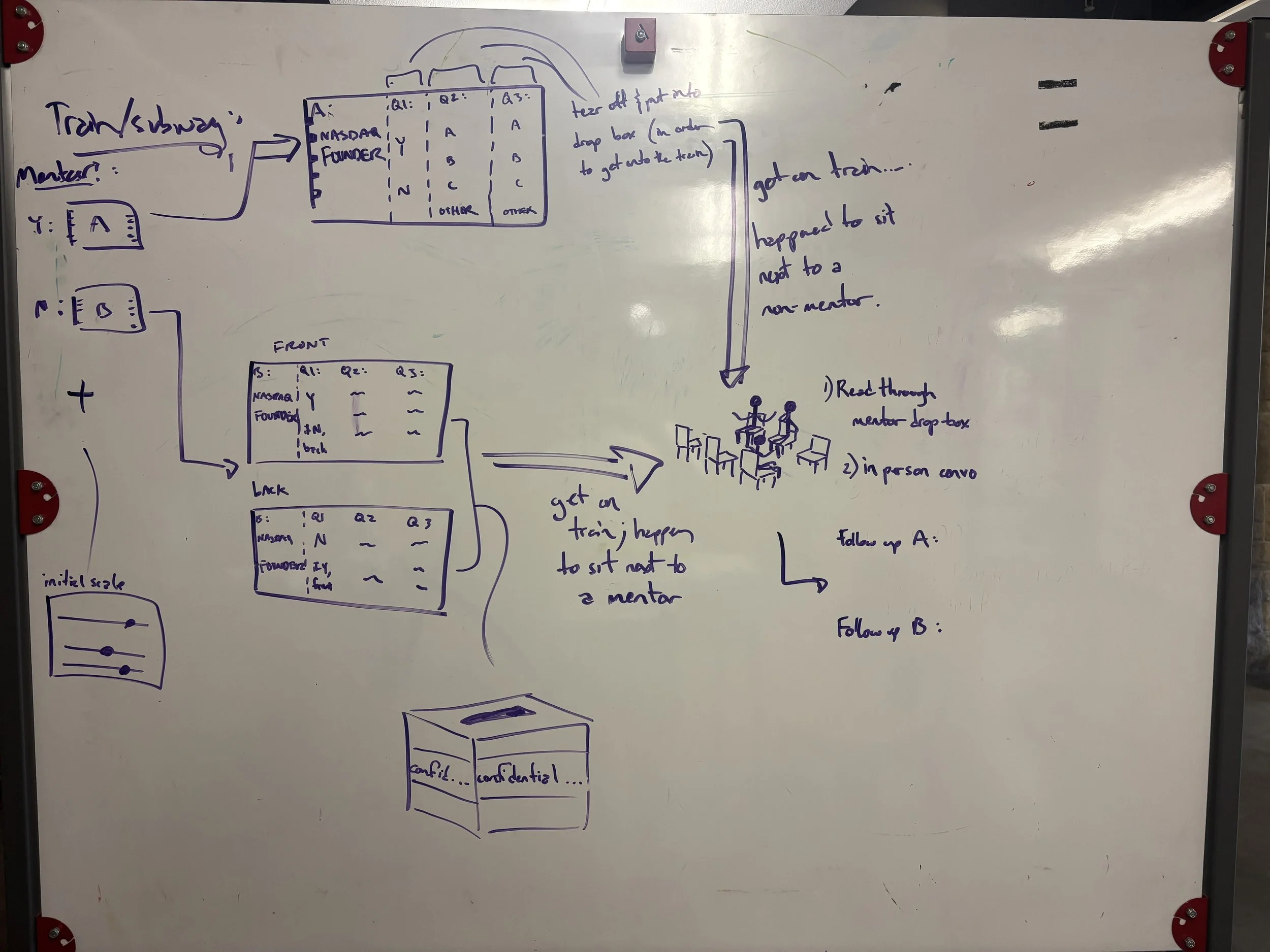
User Experience: we then transformed the information framework into the interactive experience of a ticket booth and train ride.
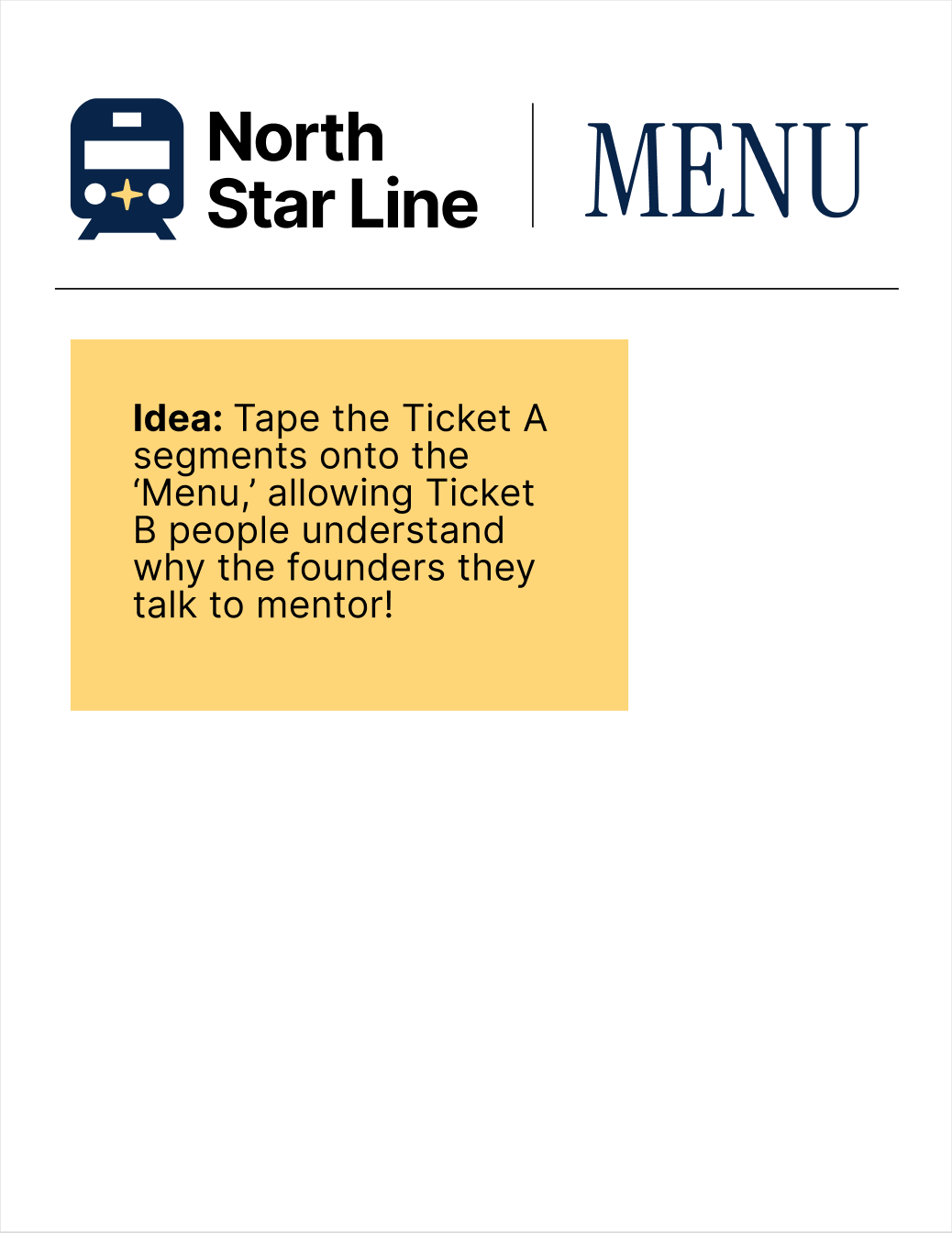
Ticket and Menu Print Outs
Ticket A: Mentor || Ticket B: Non-mentor
Live Testing
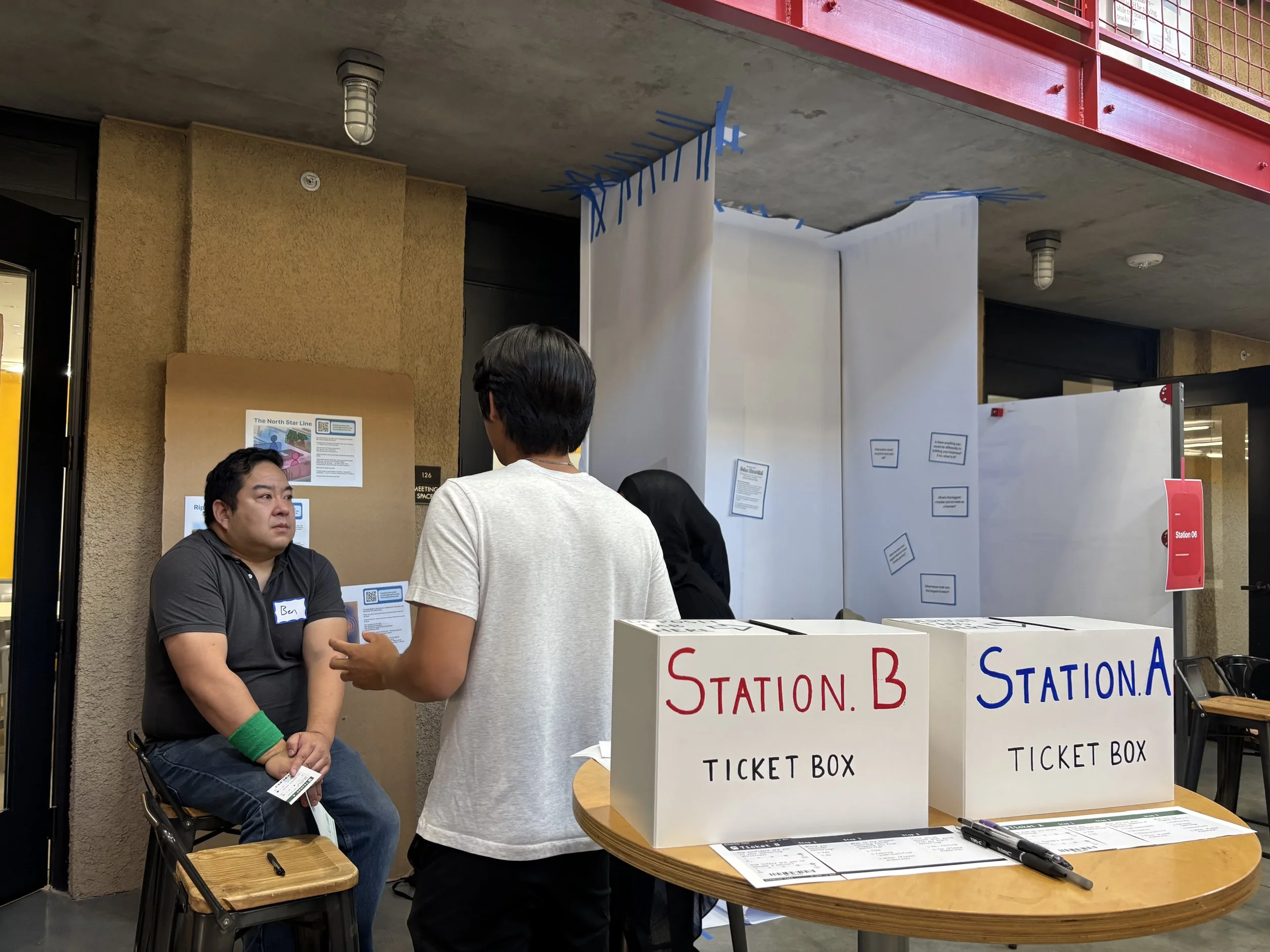
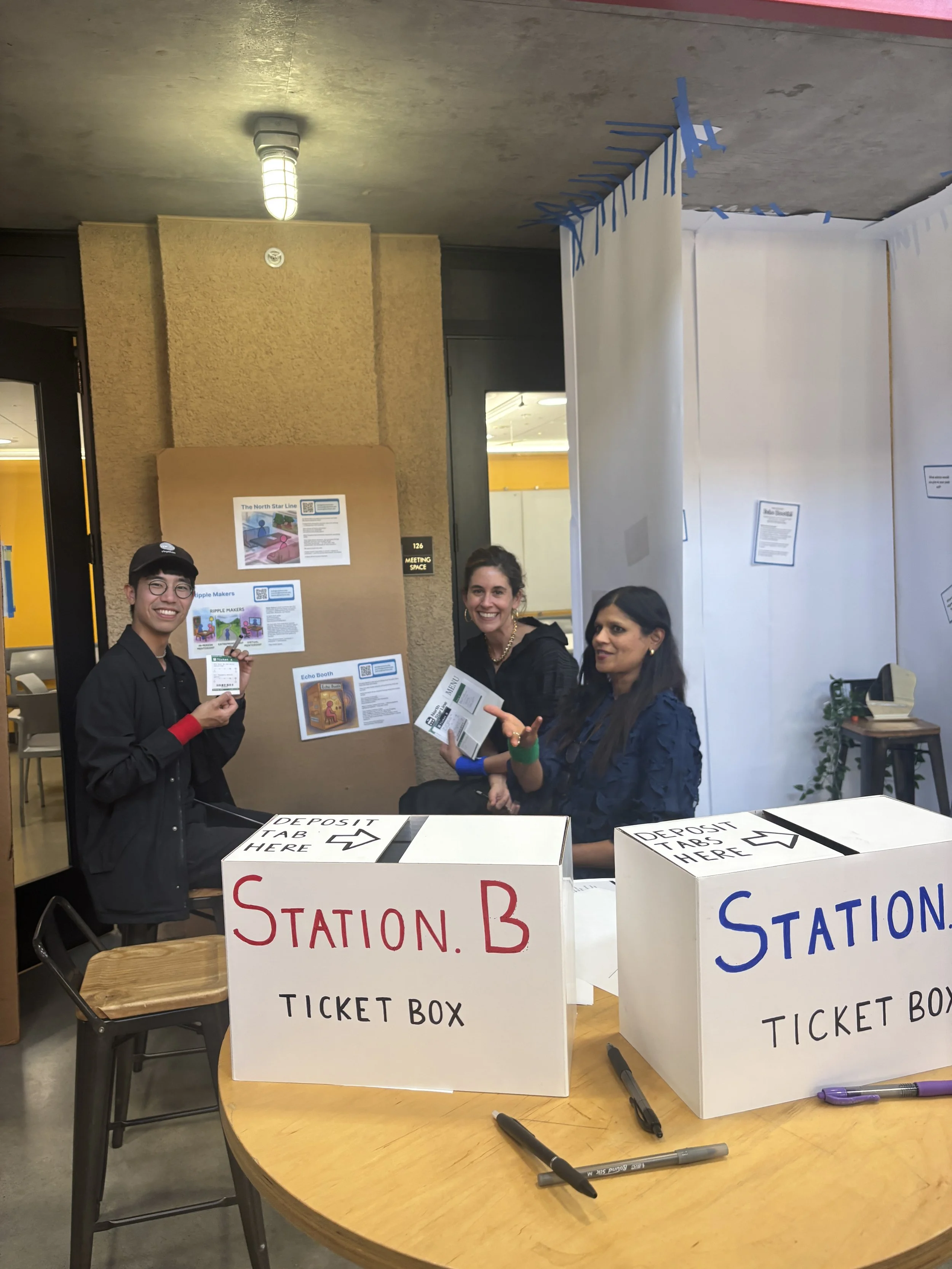
Founders from the Nasdaq programs, professors and faculty from the Stanford d.School, and staff from the Nasdaq Entrepreneurial Center came to test our prototypes and give thoughts and critiques.
Results and Findings
In addition to observing live behaviors and responses, we also compiled the deposited ticket responses.
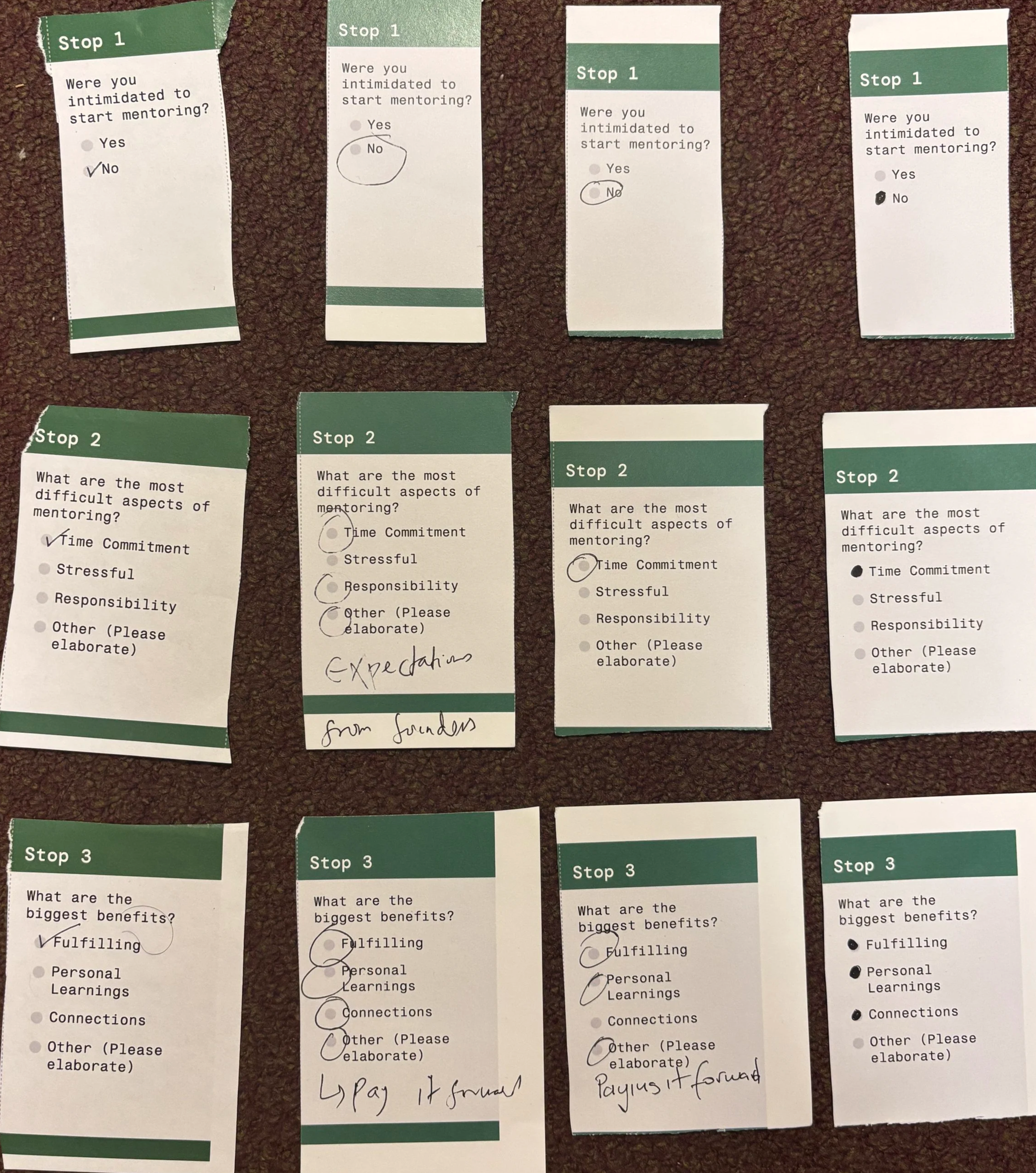
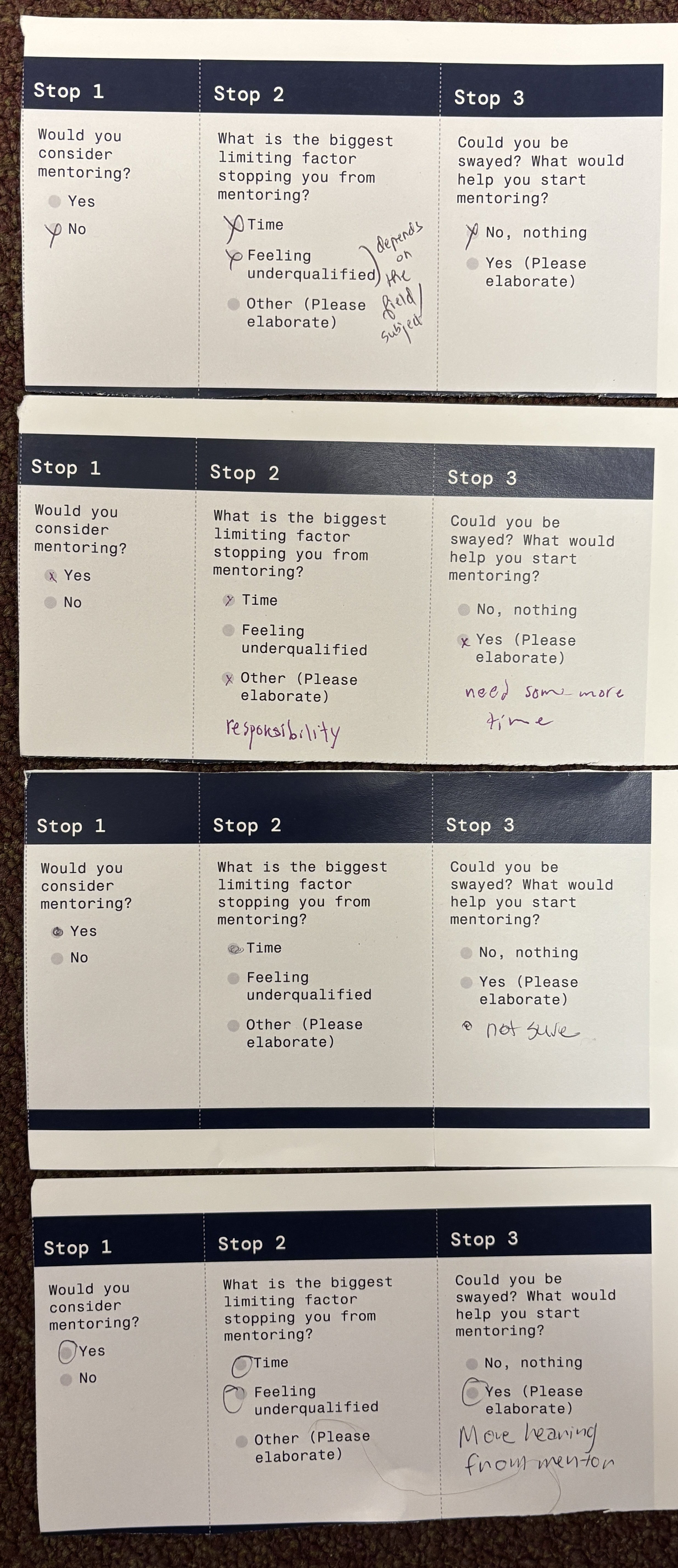
Although some non-mentors noted concern about qualification, 100% of both non-mentors and mentors listed time commitment as one of the biggest pain points of mentoring. Furthermore, all of the current mentors stated they were not intimidated to start, meaning it would be hard for them to empathize with someone who is intimidated.
PIVOT: Given that time is a much more significant restraining factor than self confidence, we realized that founders need a mentorship model that compensates the time spent with mentees because without any reciprocal benefits, mentoring is unsustainable.
—> How might we reimagine mentorship as a two-way value exchange, where giving back also fuels a founder’s own growth, expansion, and credibility?
Prototype 2: Give & Grow Rewards Program
Interface Demo
Prototype Feedback
We attended a pitch night at the VC Nest in Palo Alto to test our prototype and gather feedback.
Closing
We pitched our process and solution to a panel with the CEO, VP, and Director of Learning of the Nasdaq Entrepreneurial Center, VC’s, Stanford’s Directors of Undergraduate and Graduate Design, and other teaching faculty of the Stanford d.School.
Pitch consisted of a slide deck (Give&Grow Deck) and the above video.
Continuation
I will be continuing work with the staff at the Nasdaq Entrepreneurial Center beyond this project through a fellowship.
Tasks:
Develop methods to increase volunteerism
Research motivational behaviors